
inotify源码分析
在《监听风云 - inotify 介绍》一文中,我们介绍了 inotify 的使用。为了能更深入理解 inotify 的原理,本文开始介绍 inotify 功能的实现过程。
重要的数据结构
鲁迅先生说过:程序 = 数据结构 + 算法
想想如果让我们来设计 inotify 应该如何实现呢?下面来分析一下:
我们知道,
inotify是用来监控文件或目录的变动事件,所以应该定义一个对象来存储这些事件(在内核中定义了inotify_device对象来存储事件)。另外,当对文件或目录进行读或者写操作时才会触发事件的产生,所以应该在文件或目录的读写操作系统调用中嵌入产生事件的动作(事件由
inotify_dev_queue_event函数产生)。
在介绍 inotify 的实现前,我们先来了解下其原理。inotify 的原理如下:
当用户调用
read或者write等系统调用对文件进行读写操作时,内核会把事件保存到inotify_device对象的事件队列中,然后唤醒等待inotify事件的进程。正所谓一图胜千言,所以我们通过下图来描述此过程:

从上图可知,当应用程序调用 read 函数读取文件的内容时,最终会调用 inotify_dev_queue_event 函数来触发事件,调用栈如下:
read()
└→ sys_read()
   └→ vfs_read()
      └→ fsnotify_access()
         └→ inotify_inode_queue_event()
            └→ inotify_dev_queue_event()
inotify_dev_queue_event 函数主要完成两个工作:
- 创建一个表示事件的
inotify_kernel_event对象,并且把其插入到inotify_device对象的events列表中。 - 唤醒正在等待
inotify发生事件的进程,等待的进程放置在inotify_device对象的wq字段中。
上面主要涉及到两个对象,inotify_device 和 inotify_kernel_event,我们先来介绍一下这两个对象的作用。
inotify_device:内核使用此对象来描述一个inotify,是inotify的核心对象。intoify_kernel_event:内核使用此对象来描述一个事件。
我们来看看这两个对象的定义。
1. inotify_device对象
内核使用 inotify_device 来管理 inotify 监听的对象和发生的事件,其定义如下:
struct inotify_device {
    wait_queue_head_t       wq;         /* wait queue for i/o */
    ...
    struct list_head        events;     /* list of queued events */
    ...
    struct inotify_handle   *ih;        /* inotify handle */
    unsigned int            event_count;/* number of pending events */
    unsigned int            max_events; /* maximum number of events */
};
下面我们介绍一下各个字段的作用:
wq:正在等待当前inotify发生事件的进程列表。events:保存由inotify监听的文件或目录所发生的事件。ih:内核用来存储inotify监听的文件或目录,下面会介绍。event_count:inotify监听的文件或目录所发生的事件数量。max_events:inotify能够保存最大的事件数量。
下图描述了 inotify_device 对象中两个比较重要的队列(等待队列 和 事件队列):
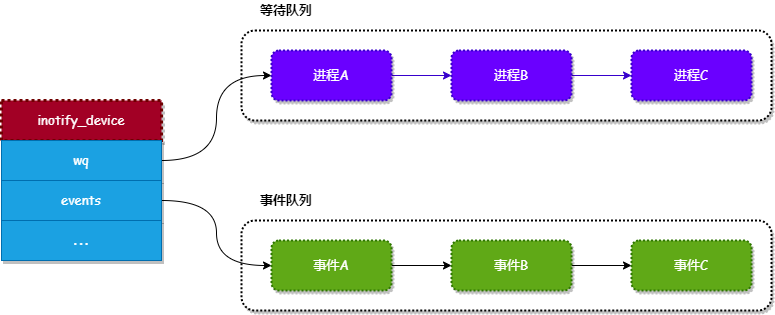
当事件队列中有数据时,就可以通过调用 read 函数来读取这些事件。
2. inotify_kernel_event对象
内核使用 inotify_kernel_event 对象来存储一个事件,其定义如下:
struct inotify_kernel_event {
    struct inotify_event    event;  /* the user-space event */
    struct list_head        list;   /* entry in inotify_device's list */
    char                    *name;  /* filename, if any */
};可以看出,inotify_kernel_event 对象只是对 inotify_event 对象进行扩展而已,而我们在《监听风云 - inotify介绍》一文中已经介绍过 inotify_event 对象。
inotify_kernel_event 对象在 inotify_event 对象的基础上增加了 list 字段和 name 字段:
list:用于把所有由inotify监听的文件或目录所发生的事件连接起来,name:用于记录发生事件的文件名或目录名。
3. inotify_handle对象
在 inotify_device 对象中,有个类型为 inotify_handle 的字段 ih,这个字段主要用来存储 inotify 监听的文件或目录。我们来看看 inotify_handle 对象的定义:
struct inotify_handle {
    struct idr          idr;        /* idr mapping wd -> watch */
    ...
    struct list_head    watches;    /* list of watches */
    ...
    const struct inotify_operations *in_ops; /* inotify caller operations */
};
下面来介绍一下 inotify_handle 对象的各个字段作用:
idr:ID生成器,用于生成被监听对象(文件或目录)的ID。watches:inotify监听的对象(文件或目录)列表。in_ops:当事件发生时,被inotify回调的函数列表。
4. inotify_watch对象
内核使用 inotify_handle 来存储被监听的对象列表,那么被监听对象是个什么东西呢?内核中使用 inotify_watch 对象来表示一个被监听的对象。其定义如下:
struct inotify_watch {
    struct list_head        h_list; /* entry in inotify_handle's list */
    struct list_head        i_list; /* entry in inode's list */
    ...
    struct inotify_handle   *ih;    /* associated inotify handle */
    struct inode            *inode; /* associated inode */
    __s32                   wd;     /* watch descriptor */
    __u32                   mask;   /* event mask for this watch */
};
下面介绍一下 inotify_watch 对象各个字段的作用:
h_list:用于把属于同一个inotify监听的对象连接起来。i_list:由于同一个文件或目录可以被多个inotify监听,所以使用此字段来把所有监听同一个文件的inotify_handle对象连接起来。ih:指向其所属的inotify_handle对象。inode:由于在 Linux 内核中,每个文件或目录都由一个inode对象来描述,这个字段就是指向被监听的文件或目录的inode对象。wd:被监听对象的ID(或称为描述符)。mask:被监听的事件类型(在《监听风云 - inotify介绍》一文中已经介绍)。
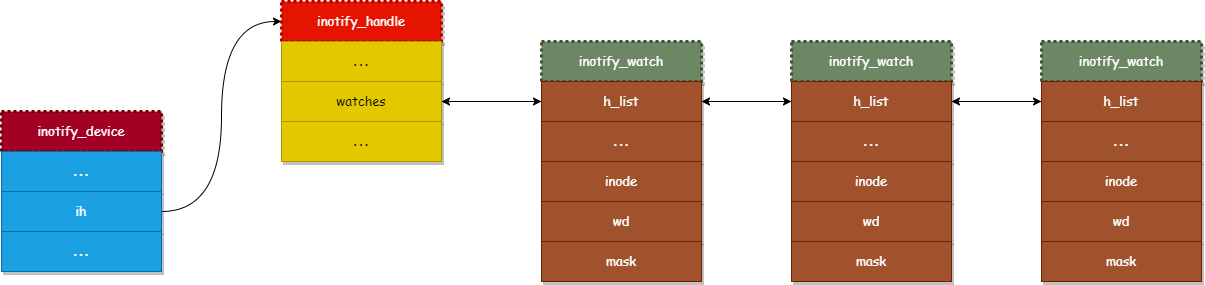
现在,我们通过下图来描述一下 inotify_device、inotify_handle 和 inotify_watch 三者的关系:
inotify功能实现
上面我们把 inotify 功能涉及的所有数据结构都介绍了,有上面的基础,现在我们可以开始分析 inotify 功能的实现了。
1. inotify_init 函数
在《监听风云 - inotify介绍》一文中介绍过,要使用 inotify 功能,首先要调用 inotify_init 函数创建一个 inotify 的句柄,而 inotify_init 函数最终会调用内核函数 sys_inotify_init。我们来分析一下 sys_inotify_init 的实现:
long sys_inotify_init(void)
{
    struct inotify_device *dev;
    struct inotify_handle *ih;
    struct user_struct *user;
    struct file *filp;
    int fd, ret;

    // 1. 获取一个没用被占用的文件描述符
    fd = get_unused_fd();
    ...
    // 2. 获取一个文件对象
    filp = get_empty_filp();
    ...
    // 3. 创建一个 inotify_device 对象
    dev = kmalloc(sizeof(struct inotify_device), GFP_KERNEL);
    ...
    // 4. 创建一个 inotify_handle 对象
    ih = inotify_init(&inotify_user_ops);
    ...
    // 5. 把 inotify_handle 对象与 inotify_device 对象进行绑定
    dev->ih = ih;
    // 6. 设置文件对象的操作函数列表为:inotify_fops
    filp->f_op = &inotify_fops;
    ...
    // 7. 将 inotify_device 对象绑定到文件对象的 private_data 字段中
    filp->private_data = dev;
    ...
    // 8. 把文件句柄与文件对象进行映射
    fd_install(fd, filp);

    return fd;
}
sys_inotify_init 函数主要完成以下几个工作:
- 调用
get_unused_fd函数从进程中获取一个没被使用的文件描述符(句柄)。 - 调用
get_empty_filp获取一个文件对象。 - 调用
kmalloc函数申请一个inotify_device对象。 - 调用
inotify_init函数创建并初始化一个inotify_handle对象。 - 把
inotify_handle对象与inotify_device对象进行绑定。 - 设置文件对象的操作函数列表为:
inotify_fops,主要提供read和poll等接口的实现。 - 将
inotify_device对象绑定到文件对象的private_data字段中。 - 把文件描述符与文件对象进行映射。
- 返回文件描述符给应用层。
从上面的实现可以看出,sys_inotify_init 函数主要是创建 inotify_device 对象和 inotify_handle 对象,并且将它们与文件对象关联起来。
另外需要注意的是,在 sys_inotify_init 函数中,还把文件对象的操作函数集设置为 inotify_fops,主要提供了 read 和 poll 等接口的实现,其定义如下:
static const struct file_operations inotify_fops = {
    .poll           = inotify_poll,
    .read           = inotify_read,
    .release        = inotify_release,
    ...
};
所以,当调用 read 函数读取 inotify 的句柄时,就会触发调用 inotify_read 函数读取 inotify 事件队列中的事件。
2. inotify_add_watch 函数
当调用 inotify_init 函数创建好 inotify 句柄后,就可以通过调用 inotify_add_watch 函数向 inotify 句柄添加要监控的文件或目录。inotify_add_watch 函数的实现如下:
long sys_inotify_add_watch(int fd, const char __user *path, u32 mask)
{
    struct inode *inode;
    struct inotify_device *dev;
    struct nameidata nd;
    struct file *filp;
    int ret, fput_needed;
    unsigned flags = 0;

    // 通过文件句柄获取文件对象
    filp = fget_light(fd, &fput_needed);
    ...
    // 获取文件或目录对应的 inode 对象
    ret = find_inode(path, &nd, flags);
    ...
    inode = nd.dentry->d_inode;
    dev = filp->private_data;  // 从文件对象的 private_data 字段获取对应的 inotify_device 对象
    ...
    if (ret == -ENOENT)
        ret = create_watch(dev, inode, mask); // 创建一个新的 inotify_watch 对象
    ...
    return ret;
}
sys_inotify_add_watch 函数主要完成以下几个工作:
- 调用
fget_light函数获取inotify句柄对应的文件对象。 - 调用
find_inode函数获取path路径对应的inode对象,也就是获取要监听的文件或目录所对应的inode对象。 - 从
inotify文件对象的private_data字段中,获取对应的inotify_device对象。 - 调用
create_watch函数创建一个新的inotify_watch对象,并且把这个inotify_watch对象添加到inotify_handle对象的watches列表和inode对象的inotify_watches列表中。
事件通知
到了 inotify 最关键的部分,就是 inotify 的事件是怎么产生的。
在本文的第一部分中介绍过,当用户调用 read 系统调用读取文件内容时,最终会调用 inotify_dev_queue_event 函数来产生一个事件,我们先来回顾一下 read 系统调用的调用栈:
read()
└→ sys_read()
   └→ vfs_read()
      └→ fsnotify_access()
         └→ inotify_inode_queue_event()
            └→ inotify_dev_queue_event()
下面我们来分析一下 inotify_dev_queue_event 函数的实现:
static void
inotify_dev_queue_event(struct inotify_watch *w, u32 wd, u32 mask, u32 cookie,
                        const char *name, struct inode *ignored)
{
    struct inotify_user_watch *watch;
    struct inotify_device *dev;
    struct inotify_kernel_event *kevent, *last;

    watch = container_of(w, struct inotify_user_watch, wdata);
    dev = watch->dev;
    ...
    // 1. 申请一个 inotify_kernel_event 事件对象
    if (unlikely(dev->event_count == dev->max_events))
        kevent = kernel_event(-1, IN_Q_OVERFLOW, cookie, NULL);
    else
        kevent = kernel_event(wd, mask, cookie, name);
    ...
    // 2. 增加 inotify 事件队列的计数器
    dev->event_count++;
    // 3. 增加 inotify 事件队列所占用的内存大小
    dev->queue_size += sizeof(struct inotify_event) + kevent->event.len;

    // 4. 把事件对象添加到 inotify 的事件队列中
    list_add_tail(&kevent->list, &dev->events);

    // 5. 唤醒正在等待读取事件的进程
    wake_up_interruptible(&dev->wq);
    ...
}
我们先来介绍一下 inotify_dev_queue_event 函数各个参数的意义:
w:被监听对象,用于描述被监听的文件或目录。wd:被监听对象的ID。mask:发生的事件类型,可以参考《监听风云 - inotify介绍》一文。cookie:比较少使用,忽略。name:发生事件的文件或目录名称。ignored:发生事件的文件或目录的inode对象,在本函数中没有使用。
inotify_dev_queue_event 函数主要完成以下几个工作:
- 通过调用
kernel_event函数申请一个inotify_kernel_event事件对象。 - 增加
inotify事件队列的计数器。 - 增加
inotify事件队列所占用的内存大小。 - 把第一步创建的事件对象添加到
inotify的事件队列中。 - 唤醒正在等待读取事件的进程(因为已经有事件发生了)。
从上面的分析可以看出,inotify_dev_queue_event 函数只负责创建一个事件对象,并且添加到 inotify 的事件队列中。但发生了什么事件是由哪个步骤指定的呢?
我们可以通过分析 read 系统调用的调用栈,会发现在 fsnotify_access 函数中指定了事件的类型,我们来看看 fsnotify_access 函数的实现:
static inline void fsnotify_access(struct dentry *dentry)
{
    struct inode *inode = dentry->d_inode;
    u32 mask = IN_ACCESS;  // 指定事件类型为 IN_ACCESS

    if (S_ISDIR(inode->i_mode))
        mask |= IN_ISDIR;  // 如果是目录, 增加 IN_ISDIR 标志
    ...
    inotify_inode_queue_event(inode, mask, 0, NULL, NULL); // 创建事件
}
从上面的分析可知,当发生读事件时,由 fsnotify_access 函数指定事件类型为 IN_ACCESS。其他的写事件、创建事件和删除事件都有相应的函数指定,可以查阅文件 include/linux/fsnotify.h。
总结
本文通过分析 inotify 的源码来了解其实现过程,从分析过程可以看出,inotify 的原理还是比较简单的:就是当用户调用读写、创建或删除文件的系统调用时,内核会注入相应的事件触发函数来产生一个事件,并且添加到 inotify 的事件队列中,然后用户就可以通过调用 read 函数来读取 inotify 事件队列中的事件。